What is chakki atta?
Atta, wheat flour and whole wheat flour
In India, atta means flour milled from the whole wheat grain — the bran, the germ and the endosperm, all ground together. It is the flour behind everyday rotis, phulkas, parathas and puris.
“Wheat flour” on its own is a broader label. It can mean atta, but refined flour (maida) is also made from wheat. The ingredients list settles it: a pack of whole wheat atta should say whole wheat.
What makes atta “chakki” atta
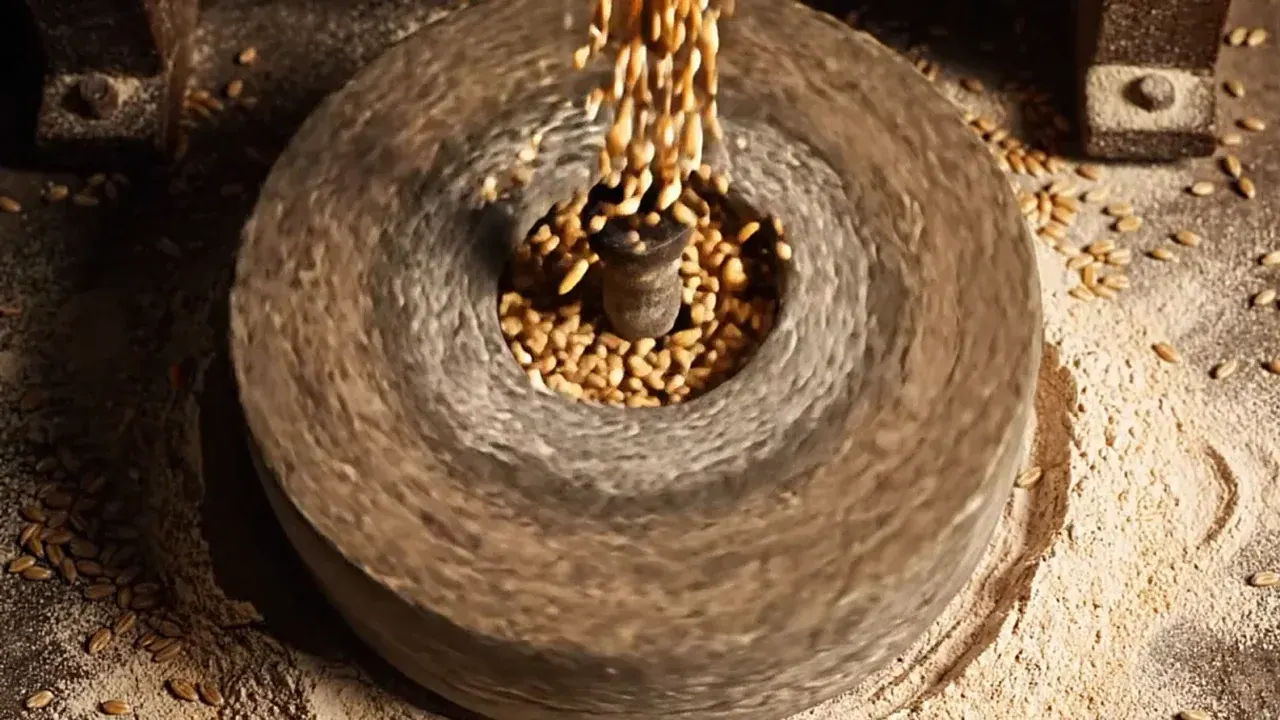
A chakki is a mill that grinds grain between two stones. The whole wheat kernel goes in and comes out as flour, with the bran and germ ground in along with the rest of the grain.
Large roller mills work differently: steel rollers break the grain in stages and can separate the bran, germ and endosperm. Whole wheat flour from a roller mill is made by putting those parts back together.
How chakki atta behaves in the kitchen
- It feels slightly granular between your fingers rather than powder-smooth.
- It takes up more water when you knead, so add water a little at a time.
- The colour is cream to light brown, with fine specks of bran.
- Resting the dough for 15–20 minutes makes it easier to roll and gives softer rotis.
How we make Samriddhi Bhog Chakki Atta
At our mill in Dankuni, West Bengal, the wheat is selected, cleaned, sorted and washed before it reaches the stone chakkis. The flour is tested in our lab and packed on automated lines in 1 kg and 5 kg packs. The full process is in our guide on how atta is made.