How to knead atta for soft rotis
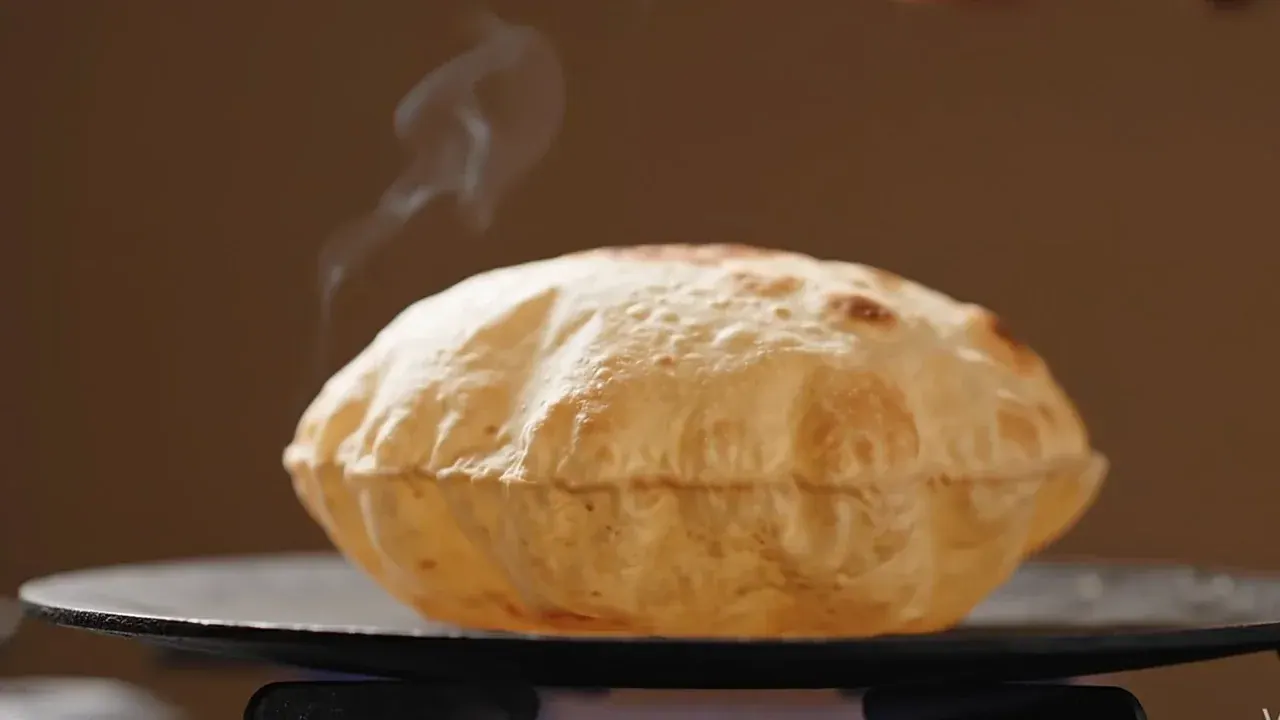
Step by step
- Put the atta in a wide bowl with a pinch of salt if you like.
- Add water a little at a time — lukewarm water works well — and mix with your fingers. Chakki atta absorbs more water than refined flour, so don’t add it all at once.
- When the flour comes together, knead with the heel of your hand for 5–8 minutes, folding the dough over itself.
- Stop when the dough is soft, smooth and springs back slowly when pressed. It should not stick to your fingers.
- Cover the bowl and rest the dough for 15–20 minutes. This makes it easier to roll and gives softer rotis.
- Knead briefly once more, divide into equal balls and roll evenly, dusting lightly with dry atta.
Common problems
| Problem | Likely cause | Fix |
|---|---|---|
| Dough cracks when rolled | Too little water, or not rested | Add a few drops of water, knead, rest 15 minutes |
| Dough sticks to hands | Too much water | Knead in a spoonful of atta at a time |
| Rotis turn hard | Stiff dough, or cooked too long on a cool tawa | Make the dough softer; cook on a hot tawa |
| Rotis don’t puff | Uneven rolling or a cool tawa | Roll evenly; make sure the tawa is hot |
Leftover dough
Keep it in a covered box in the fridge and use it within a day. Let it come to room temperature and knead briefly before rolling.